
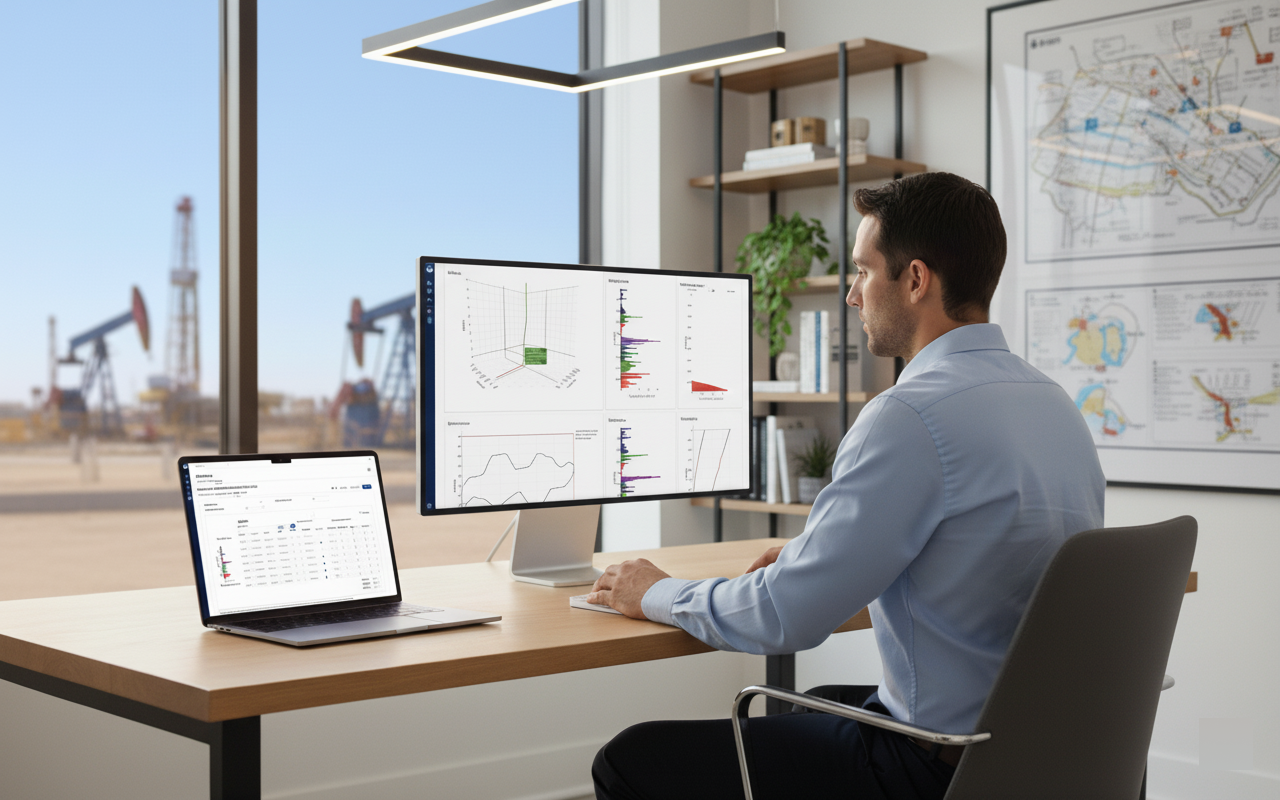
Moving Off Desktop: A Guide for Independent Rod Lift Engineers
What the transition from legacy desktop rod pump tools to cloud-based simulation actually looks like - what transfers, what changes, and what you gain.
PetroBench 2.0 - Global units, version control, multi-language support and more.PetroBench 2.0 is hereSee what's new

A walkthrough of every capability in the RodSim Professional package - cubic spline interpolation, 3-way comparison, design assistance, reporting, import, and well management.
Documented case studies and field experiences with quantified outcomes
What the transition from legacy desktop rod pump tools to cloud-based simulation actually looks like - what transfers, what changes, and what you gain.
A side-by-side comparison of desktop and cloud-based rod pump simulation workflows across a typical production engineer's day.
License fees are the visible cost. The hidden costs - IT overhead, file management, collaboration friction, and risk exposure - are where the total cost of ownership diverges.
An honest comparison of RODSTAR, XROD, SROD, QRod, and PetroBench for rod pump design - pricing, features, and which tool fits your workflow.
Deviated wells break assumptions that vertical simulators rely on. Here is what to look for in rod pump simulation software that handles directional wellbores correctly.
A technical overview of the PetroBench V2 platform release: the engineering decisions behind cubic spline interpolation, version control, multi-language support, and the redesigned simulation workflow.
A practical framework for evaluating rod pump design tools - from deployment and well types to team size, integration, and total cost of ownership.
A factual comparison of PetroBench and S-Rod for engineers evaluating rod pump simulation platforms.
Both PetroBench and RodStar solve wave-equation-based rod pump simulation. Here is how they differ in architecture, licensing, collaboration, and workflow - and how to migrate between them.
A practical guide to moving your rod pump simulations from desktop tools like RodStar and S-Rod to a cloud platform, step by step.
How PetroBench handles SSO, role-based access, audit logging, and data residency - written for the IT team evaluating enterprise engineering software.
Rod string designs change constantly, but most teams have no record of what changed or why. Version control fixes that.
Where the rod lift software market stands in 2026: the shift from desktop to cloud, what has changed in simulation capabilities, and where the remaining gaps are.
A comparison of file-based and structured data architectures for rod lift engineering: how data organization affects design quality, collaboration, knowledge retention, and failure investigation.
Technical evaluation criteria for IT teams assessing cloud-based engineering platforms: authentication, data architecture, compliance, integration, and deployment considerations.
Framework for deciding when to use simulation vs experience-based rules. Covers scenarios where each excels and common mistakes.
Talk to our engineering team about your rod lift design workflow.